2 February 2022
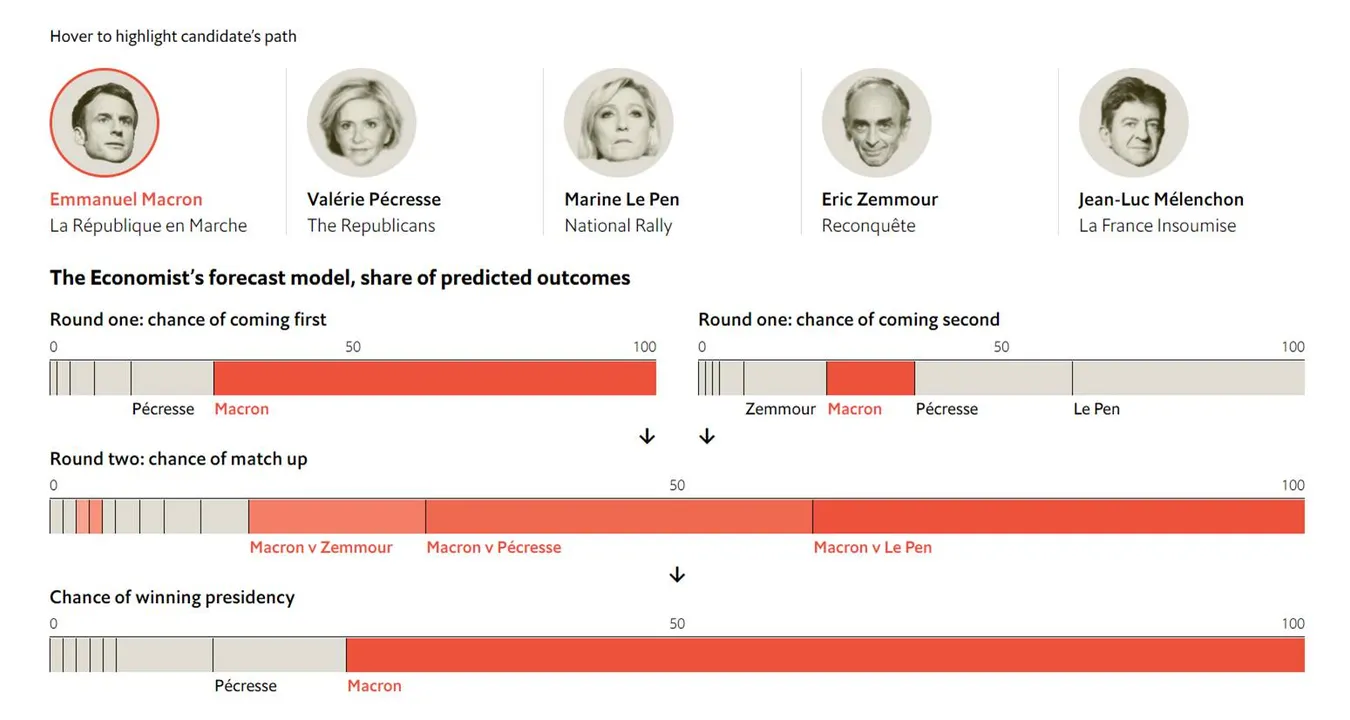
The Economist’s French presidential election model forecasts a 79% chance of victory for Emmanuel Macron; potentially serious challenge from Valérie Pécresse
Read more

Business Finance, Consumer, Entertainment, Lifestyle, Business Finance, Lifestyle, Consumer, Retail
Key insights:
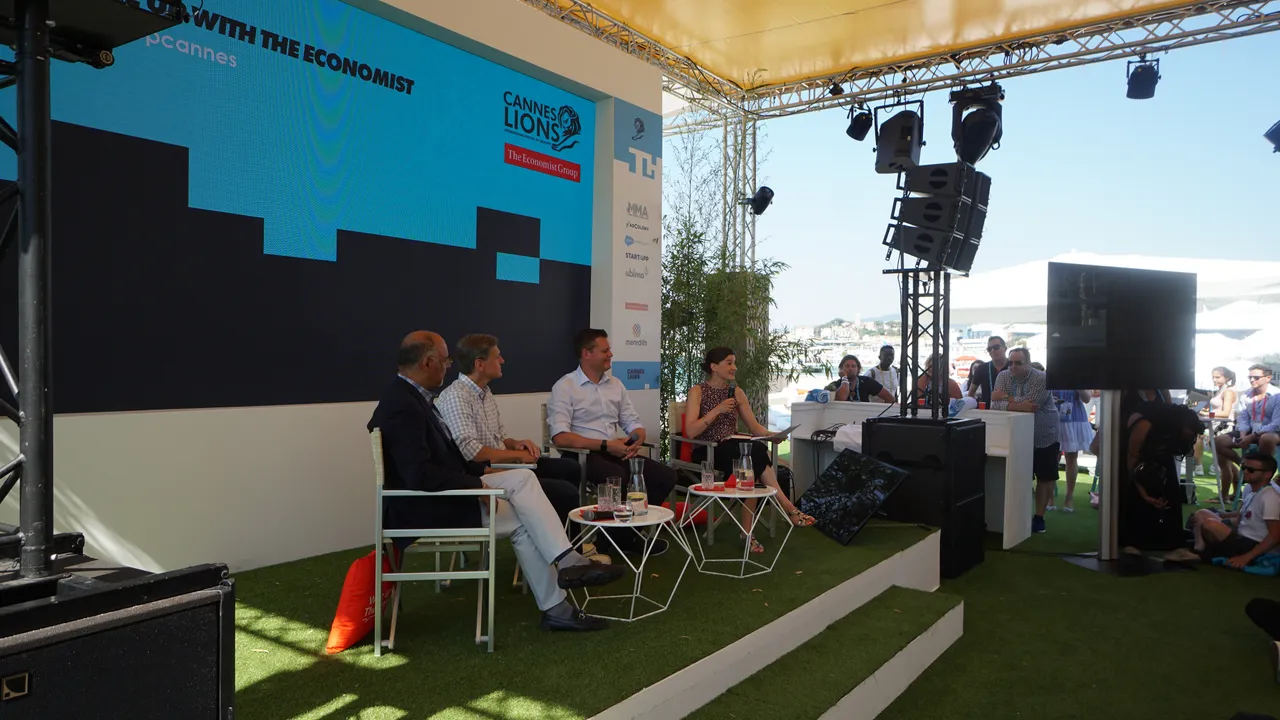
(Cannes) – The Economist Group held its second ‘Wake Up with The Economist’ panel session at the Cannes Lions festival today. Moderated by Rosie Blau, Editor of The Economist’s 1843, today’s session featured thought provoking discussions from Andrew Clarke, Chief Marketing and Customer Officer at Mars, Raja Rajamannar, CMO, Mastercard and Marc Pritchard, Chief Brand Officer at P&G
Asked about the biggest marketing challenges of the
last year, Marc Pritchard revealed that for him it was around “mass disruption
and the need to reinvent how to build our brand really, really fast”.
“70% of consumers say ads are annoying and they
don’t believe what ads say,” he added.
“We’re reinventing media from mass blast to mass one-to-one, we’re reinventing advertising from less push to more pull, we’re reinventing agency partnerships from less outsourcing to more of our people’s hands on the keyboard and we’re reinventing marketing to be a source for good and a source for growth – so it’s a massive overhaul.”
Raja Rajamannar says nothing much has changed since the same time last year - “talent has been a huge issue” and continues to keep him awake at night.
Meanwhile for Andrew Clarke, the biggest challenge
has been around growth – “sifting through the opinions, the news, the fake
news” and having a clear point of view about driving growth and keeping the
teams focussed “but allowing space to innovate and do things differently”.
When it comes to measuring effectiveness, Pritchard said P&G had been able to cut out digital waste by relying on data.
“We’ve amassed some very big databases in every market – covering up to 80% of markets like the US and China. That data allows us to mix it with purchase data, identify how to better target...it’s mass reach with one-to-one precision.”
Rajamannar said the company has moved away from advertising because “it’s not the way forward”, and pivoted significantly towards experiential marketing.
“Internally we keep saying that storytelling, which is classical advertising, is dead. It’s all about storymaking.”
The company has “gone heavily into sponsorships” - identifying nine different passion points for consumers and then curating and creating experiences around them. Metrics measure the effectiveness of the sponsorships in driving business, in building the brand and setting a sustainable competitive advantage. “One of the key advantages we have in our category is that we can see data in real time,” Rajamannar added.
Clarke said around 30% to 35% of Mars’ spend was on digital media and he would expect that to increase once “we can prove the platforms are delivering for us”.
He stressed the importance of test and learn – “finding enough dollars that are ring fenced in the local markets to really test out the new platforms”. He said 80% of Mars’ spend was put behind proven platforms; 15% used to test potential platforms; and 5% “just out there”.
It allowed Mars to innovate at a local level - “most of our brilliant campaigns and successes come from local markets which we’re then in a position to scale”, Clarke added.
When asked about purpose-driven marketing, Clarke said “if done well, purpose can really add value and can start a conversation with a customer. For example, we did some brilliant work with Skittles and Pride and Tesco in the UK, which changed the dialogue completely with Tesco.”
“The younger generation really believe in purpose and what’s behind brands, what we stand for, they believe in transparency and as brands owners we therefore have a responsibility to drive that”.
Pritchard said P&G had a focus on gender equality - “if you close the gender pay gap, McKinsey estimates it would add 28 trillion dollars to the world economy – that’s a lot of purchasing power, that’s good for growth”.
He said advertising that is more gender equal has a 10% increase in trust rating and a 26% increase in sales growth. “Our brands that have the most gender equal campaigns tend to do better.”
The panel was asked if the #MeToo movement had
changed how companies use sex to sell.
Pritchard argued that “I don’t think sex sells, it does just the opposite”.
He said an ANA #SeeHer movement study of 40,000 ads which found that 29% of ads portrayed women inaccurately – “either through some form of stereotyping, objectification or diminished character”.
Rajamannar says 80%+ of all purchase decisions in the world are made by women and the company committed to ensuring this was reflected in the composition of its marketing team. “In five years we’re very close to that objective – 75% of all marketing and communications people at Mastercard are women.”
Tomorrow’s ‘Wake Up with The Economist’ panel, which will be moderated by Andrew Palmer, Business Affairs Editor at The Economist, includes the following world-class line-up:
For details or for further comment from The Economist Group, please contact rebeccapartridge@economist.com
2 February 2022
2 February 2022
17 November 2021

12 November 2021