2 February 2022
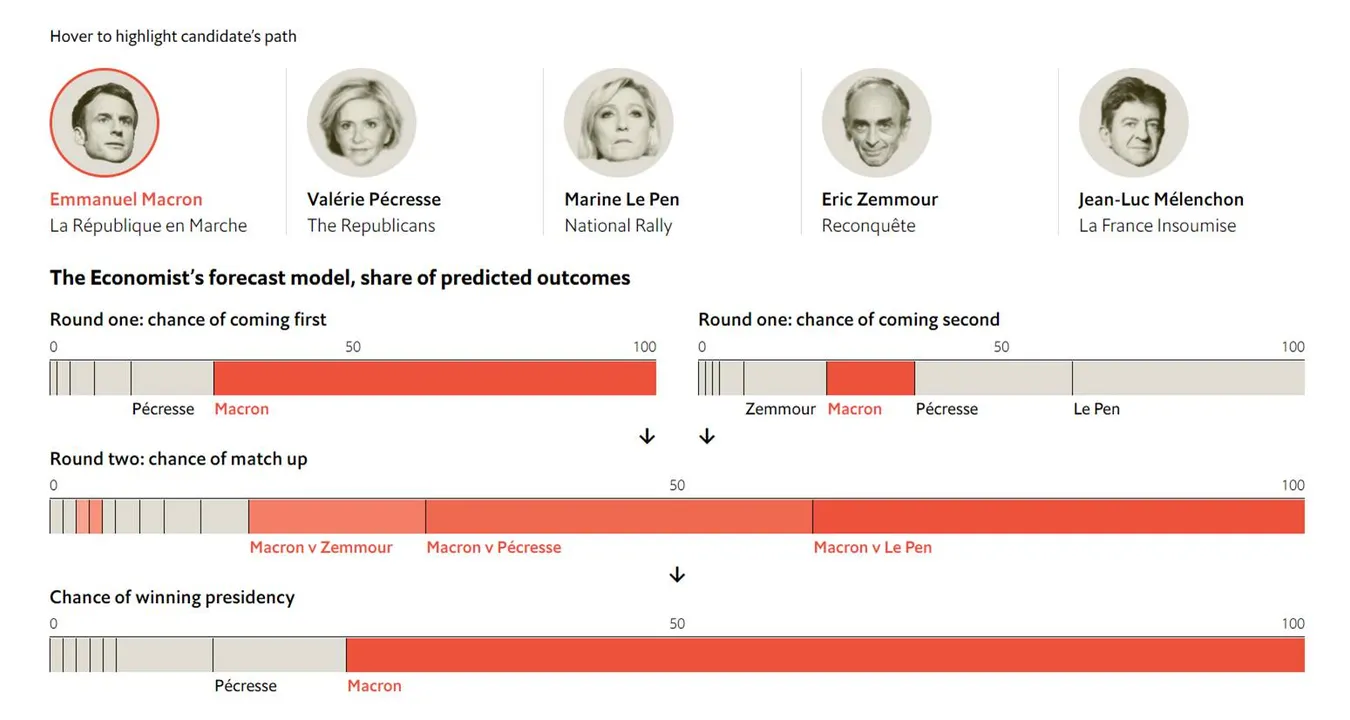
The Economist’s French presidential election model forecasts a 79% chance of victory for Emmanuel Macron; potentially serious challenge from Valérie Pécresse
Read more

Business Finance, Consumer, Government, Health, Non Profit, Technology, Transport, Sustainability
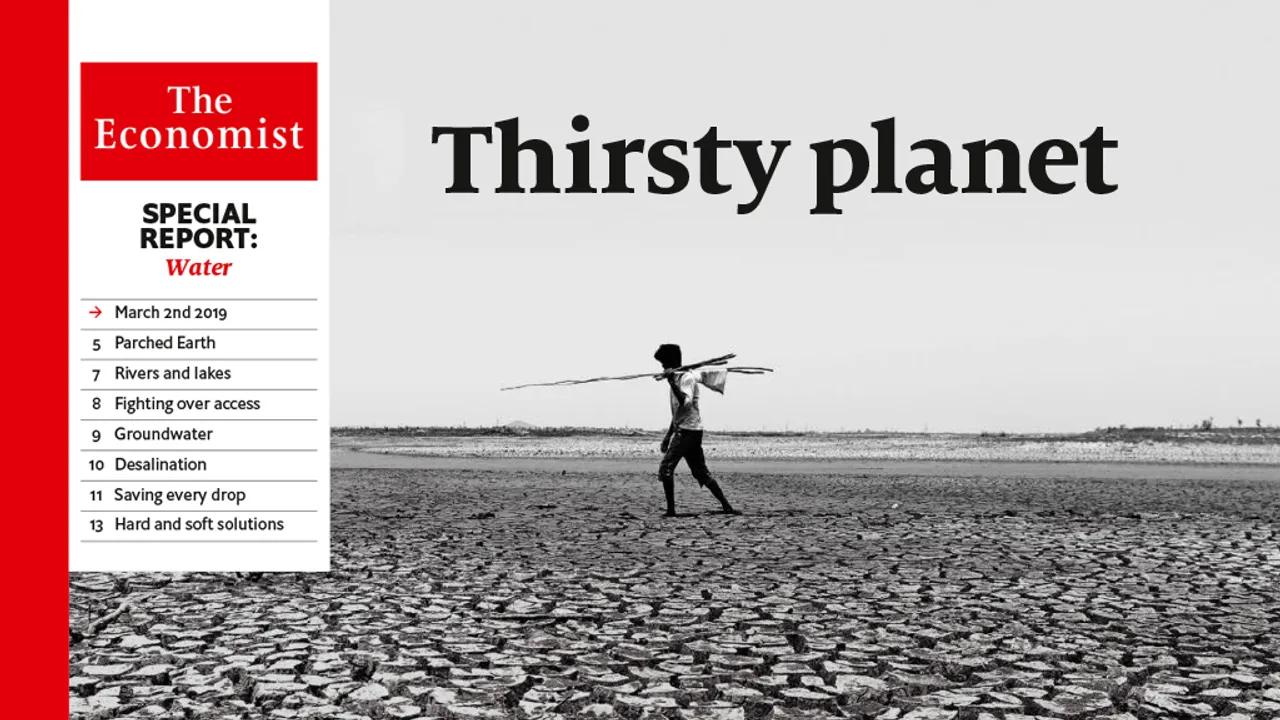
LONDON, UNITED KINGDOM - March 1st, 2019 - “Water”, a new Special Report from The Economist published in the March 2nd edition and online at economist.com, examines the world’s water problems. Simon Long, international editor, says the best way to solve the world’s water problem is to use less of it.
Anxiety about the world’s freshwater supplies is nothing new, but it is getting worse, for two main reasons: the continued growth in the world’s population, including in areas already facing acute water stress; and climate change, which is making weather patterns in many parts of the world more erratic and is expected to cause more frequent extreme events, including droughts and floods.
This report provides a broad overview of the current debate about the future of the world’s water. It starts by looking at the prospects for freshwater supplies. In many parts of the world rivers and lakes carry less water than they used to, or are even drying up. Another problem is the over-exploitation of subterranean groundwater, which in many parts of the world, such as India and China, is being pumped to the surface faster than it is replenished by rainfall.
The report also considers the main uses of water, starting with agriculture, which accounts for some 70% of total demand. It points out how a failure to price water properly leads to wastage, the planting of inappropriate crops and the contamination of aquifers.
Hydrologists agree that in principle there is enough water for everyone, and there still will be in 30 years’ time when the world’s population may be up to 2bn bigger. The problems lie in management and distribution. The report looks at ways both to manage demand--such as more efficient forms of irrigation and less water-intensive crops--and to enhance supply by techniques such as desalination. It argues that in much of the world, the problem is primarily political: to persuade consumers to pay a proper price for this most essential of all commodities, and governments to devote resources to getting water to the poor who need it most.
You can read the full report here.
For more information and to interview Simon Long on this topic, please contact:
Tom Amos/The Economist (US), tomamos@economist.com /+1 212 541 0583
Holly Donahue/The Economist (UK), hollydonahue@economist.com /
+44 (0) 20 7576 8379
About The Economist (www.economist.com)
With a growing global audience and a reputation for insightful analysis and perspective on every aspect of world events, The Economist is one of the most widely recognised and well-read current affairs publications in the world. In addition to the weekly print and digital editions and website, The Economist publishes Espresso, a daily news app, Global Business Review, a bilingual English-Chinese product and Economist VR, a virtual-reality app. Economist Radio produces several podcasts a week and Economist Films produces short- and long-form video. The Economist maintains robust social communities on Facebook, Twitter, LinkedIn, Snapchat, LINE, Medium and other social networks. A recipient of many editorial and marketing awards, The Economist was named the most trusted news source by the 2017 Trusting News Project Report.
2 February 2022
2 February 2022
17 November 2021
12 November 2021