2 February 2022
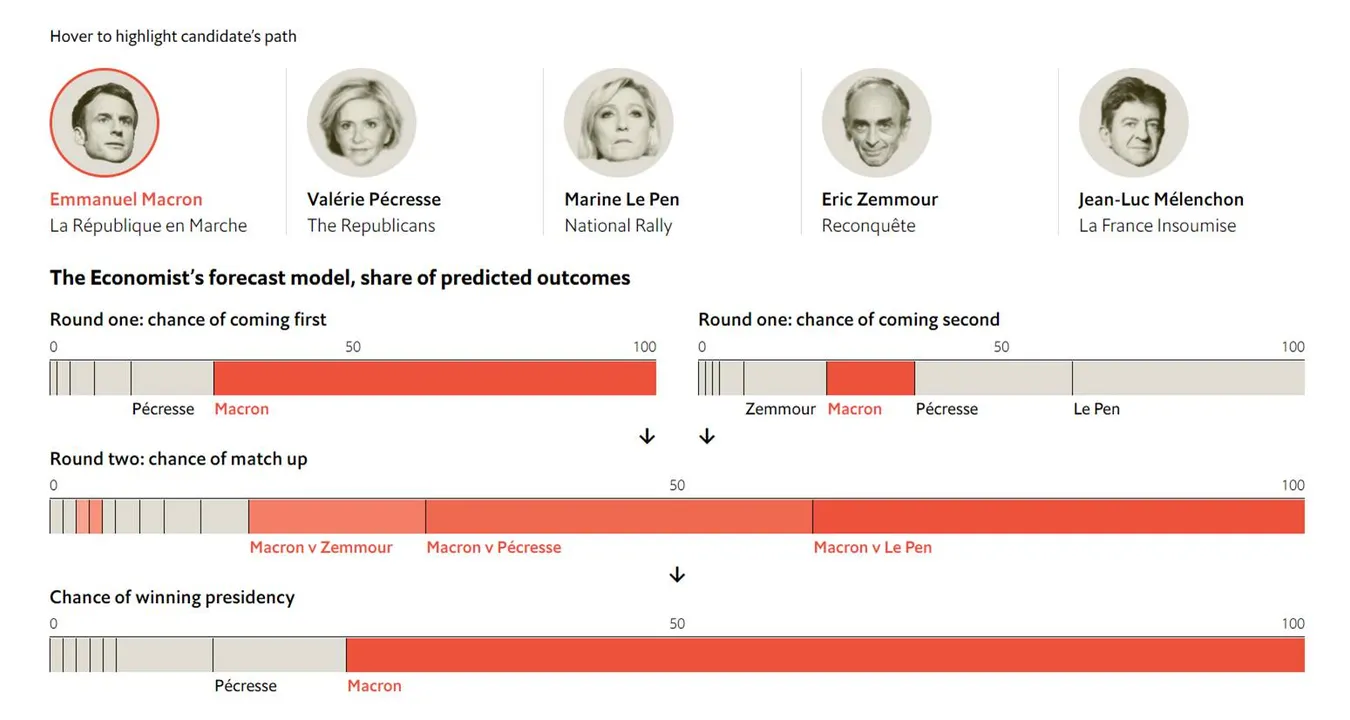
The Economist’s French presidential election model forecasts a 79% chance of victory for Emmanuel Macron; potentially serious challenge from Valérie Pécresse
Read more

Business Finance, Consumer, Entertainment, Luxury
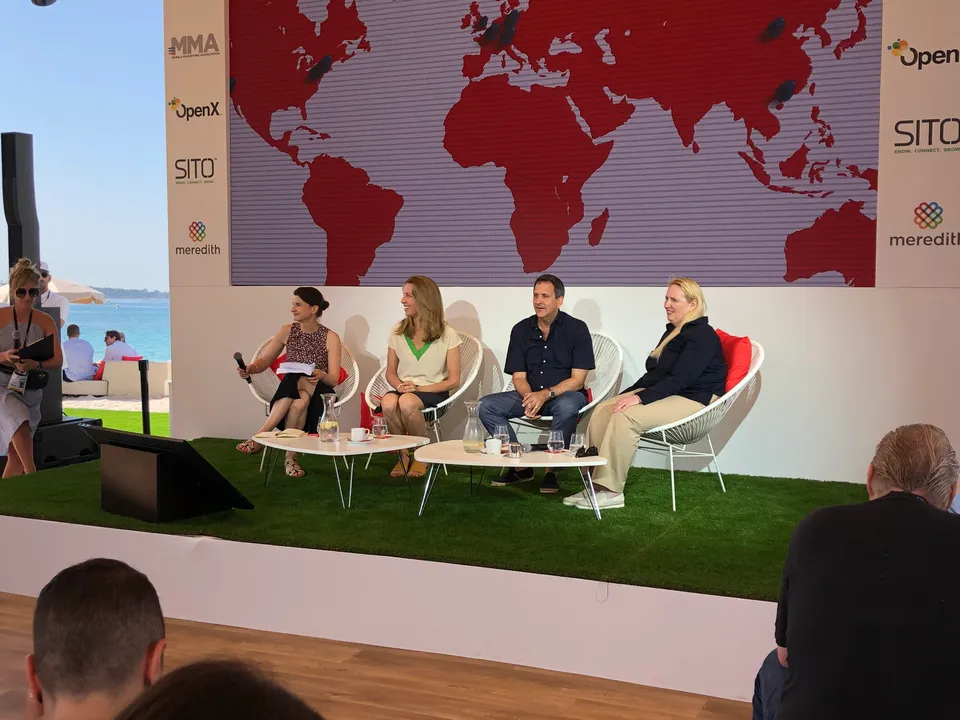
Cannes, France - June 18th 2019 - The Economist Group (TEG) has returned to the Cannes Lions International Festival of Creativity with a programme of engaging debate and discussion led by The Economist journalists. In its second daily Wake Up With The Economist At Cannes Lions panel, Rosie Blau, Editor of The Economist’s 1843, Karin Timpone, Chief Marketing Officer, Marriott, John Rudaizky, Global Brand & Marketing Leader, EY and Andréa Mallard, Chief Marketing Officer, Pinterest spoke about what brands and marketers need to do to succeed in a changing marketing environment.
The three industry leaders discussed the need to remain human to drive creativity; the role of AI in the marketing landscape; the balance between censorship and avoiding misinformation; the need for brands to have a strong stance on socio-political issues; how to make the industry more diverse and more. We have compiled their responses below.
Staying human
For the second session in a row, the panel agreed that the industry should stop using the word ‘consumer’ and instead focus on people. Answering a question from the floor, John Rudaizky said that the focus of marketers has to remain on people. This was seconded by Andréa Mallard, who acknowledged that coming from a tech company, it can be very easy to focus on users, and then numbers, rather than really understanding the people and their behaviour. She spoke about Pinterest’s efforts to meet ‘pinners’ and find out how they use the platform in their day to day lives. Mallard informed the audience that one of the key points of difference for Pinterest from other platforms is that rather than trying to get people to spend more time on its website, it inspires people to do things in the real world. She argued that “brands should be additive and trying to add to the person's experience, so it’s a net benefit - it’s time well spent rather than distraction”.
The conversation then moved onto the role of AI and robots, with John Rudaizky revealing that EY already has 2000 robots among its workforce. And can these robots replace marketers? The panel agreed that this eventuality is way off and for the foreseeable future it would be a case of robots augmenting rather than replacing humans, especially for those with creative roles such as marketers. Andréa Mallard expanded on this, arguing: “the role of all of us is getting to the creative, human led insight that can be supported with AI.”
Diversity in marketing
Ms. Blau posed the question, “why is marketing so white and what can we do about it?” to the panel. Karin Timpone pointed to Marriott’s work with diversity and inclusion and the importance of measurement to drive change: “what’s measured is what’s done, and we measure”.
Andréa Mallard focused on the amount of marketing jobs requiring degrees and the adverse effect this has on diversity, saying, “why do we require an advanced degree when what really matters is what you learn on the job?”.
John Rudaizky, meanwhile, emphasised the business benefits of diversity, stating: “There’s both a moral imperative and a business one. And the business one is two fold, you need different skills and you need to reflect your customers”
Brands and socio-political issue
Moving onto the issue of brands and their involvement in socio-political issues, discussion turned to Pinterest’s recent decision to ban anti-abotion group, Live Action, with Andréa Mallard defending the decision by emphasising that it was not an attempt at censorship. Instead, Andréa argued that the issue was around misinformation, as Pinterest’s focus is on “content being true”.
The discussion then moved on to Marriott’s site being shut down in China after listing Hong Kong and Taiwan as countries rather than territories. Karin Timpone explained that “it was a typo” but “did grow into becoming a bigger question” and is “a good example of how you don’t know where these things will come from”. She ultimately emphasised that brands need to be on top of everything on social because, like the issue with China, “these stories have the potential to move quickly.”
Speaking more generally about brands dealing with socio-political issues, John Rudaizky suggested that global and even local companies need a clear narrative, core purpose and values. Arguing that if an organisation has strong values it can get through any issue, he quoted Tony Blair who said that “a good politician needs to know where he sits”: John believes that the same is true for brands.
Tomorrow’s Wake Up with The Economist panel, which will be moderated by Zanny Minton Beddoes, editor-in-chief, The Economist,
includes the following world-class line-up:
Wake Up With The Economist At Cannes Lions returns every day at Cannes Lions. To see more on the upcoming talks, see here.
For more information contact:
Hilary Gray / Gill Browne
hilary.gray@propellergroup.com / gill.browne@propellergroup.com
UK landline: +44 203 301 5353
UK mobile: +44 750 778 9449
Lauren Hackett
laurenhackett@economist.com
About The Economist Group
More than just a newspaper, The Economist Group is a world-renowned multinational media company that inspires and connects with the most influential audiences across the globe. We make thought that counts – powerful, provocative thought that helps brands engage on a different level with audiences around the world. The Economist Group creates highly original communication programmes by connecting thinking between insights, digital content, live experiences and distribution. The Economist Group brands include; The Economist, ‘The World In…’, 1843, Economist Films, Economist Careers Network, Economist Intelligence Unit, Economist Events, Signal Noise, TVC, EuroFinance and [E] BrandConnect.Visit: https://cannes.economist.com/ for further information.
2 February 2022
2 February 2022
17 November 2021
12 November 2021